Contents:
- Why Biodegradable Pots Are Worth the Switch
- The Best Biodegradable Flower Pots: Ranked and Reviewed
- Jiffy-7 Peat Pellets — Best for Small Seedlings and Cuttings
- CowPots 3-Inch Biodegradable Pots — Best for Nutrient-Rich Transplanting
- Fertilpot Fiber Pots — Best for Structural Integrity and Larger Starts
- Burpee Biodegradable Peat Pots — Best Budget Option for Home Gardeners
- Eco-Friendly Coir Pots (Coco Coir) — Best for Water Retention and Sustainability
- Newspaper Pots (DIY) — Best Free Option for Resourceful Growers
- Fertil Pot Biodegradable Square Pots — Best for Space-Efficient Tray Systems
- Biodegradable Pot Comparison Table
- How to Choose the Right Compostable Pot for Your Seedlings
- How Long Will Your Seedlings Be Indoors?
- What Soil Type Will You Be Transplanting Into?
- What’s Your Budget and Scale?
- Are You Focused on Environmental Impact?
- Choosing Based on Flower Type
- Tips for Getting the Best Results from Biodegradable Flower Pots
- Frequently Asked Questions About Biodegradable Seedling Pots
- What are the best biodegradable flower pots for seedlings?
- Do biodegradable pots actually decompose in the ground?
- Can I use peat pots for all types of flowers?
- Are biodegradable pots more expensive than plastic?
- What’s the difference between peat pots and coir pots?
- Ready to Start Growing Smarter
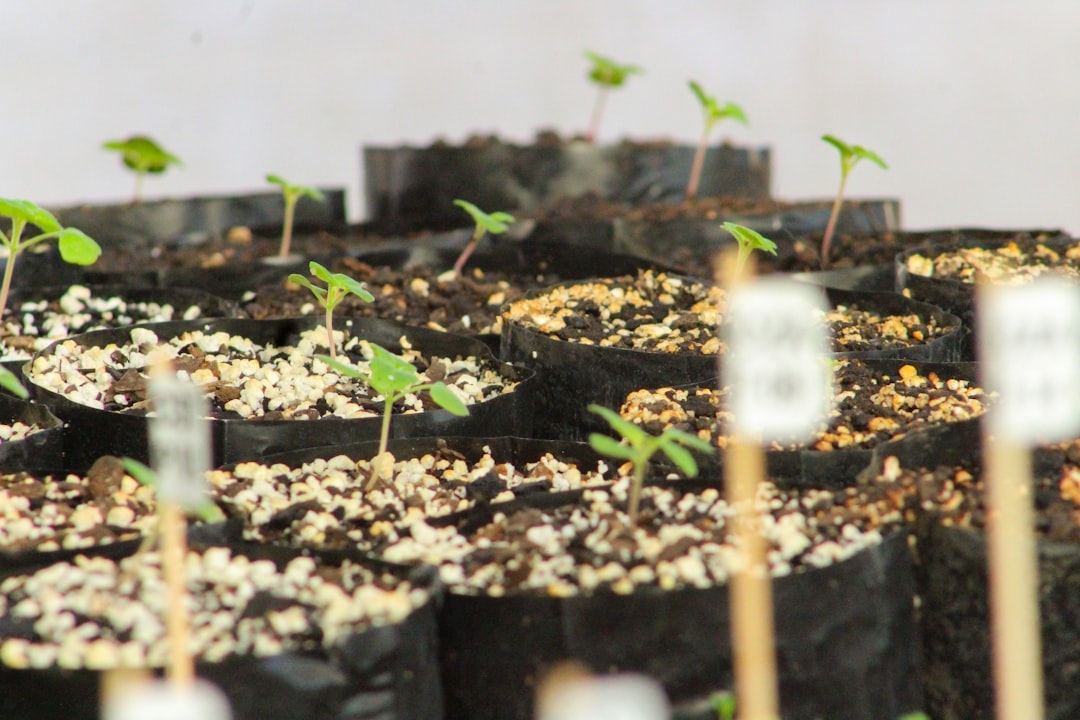
Your seedlings deserve a better start — and so does your soil. Biodegradable pots have quietly transformed how serious growers, home gardeners, and commercial florists approach transplanting. No more root shock. No more plastic waste piling up in the potting shed. Just healthy roots pushing straight through compostable walls and into the earth where they belong.
Choosing the best biodegradable flower pots isn’t as simple as grabbing whatever’s on the shelf at your local garden center, though. Material matters. So does size, decomposition rate, and whether the pot holds its shape long enough to actually be useful. Get it wrong and you’re dealing with soggy walls that collapse before transplant day — or pots that take two seasons to break down.
This guide cuts through the noise. Below, you’ll find detailed comparisons of the top options on the market, a breakdown of what each material does best, and clear guidance on which pot suits which situation.
For most seedling growers, Jiffy-7 Peat Pellets offer the best all-around value for small starts, while CowPots 3-inch Biodegradable Pots are the top pick for nutrient-rich transplanting. If you’re scaling up a cutting garden or working with larger seedlings, Fertilpot Fiber Pots are hard to beat for structural integrity. Keep reading for the full breakdown.
Why Biodegradable Pots Are Worth the Switch
Transplant shock kills more seedlings than most gardeners realize. Studies from the University of Minnesota Extension show that root disturbance during transplanting can set back growth by 2–4 weeks in sensitive annuals like snapdragons and lisianthus. Biodegradable pots eliminate that problem entirely — the seedling goes into the ground, pot and all, with roots intact.
Beyond plant health, the environmental math is compelling. A single commercial greenhouse operation can generate thousands of plastic six-packs per season. Switching to compostable alternatives removes that waste stream completely. And for US growers in USDA Hardiness Zones 3–9, where the growing season is tight, those saved weeks of recovery time genuinely move the needle on bloom quality and timing.
Professional cut-flower growers often score the bottom of peat or fiber pots with a knife before planting. This simple 10-second step accelerates root penetration by up to 30% and ensures even the thicker-walled pots break down on schedule. Don’t skip it — especially in heavier clay soils.
The Best Biodegradable Flower Pots: Ranked and Reviewed
1. Jiffy-7 Peat Pellets — Best for Small Seedlings and Cuttings
These compressed peat discs expand to roughly 1.75 inches tall when soaked in water, forming a ready-to-use seedling cell with a fine mesh exterior. They’re incredibly space-efficient — a tray of 50 pellets fits on a standard 10×20-inch heat mat. Jiffy-7s are ideal for tiny seeds like lobelia, petunia, and snapdragon that need a fine, moisture-retentive medium to germinate. The mesh holds everything together during transplant. Peat decomposes within one growing season in most US climates. The downside: peat has a naturally low pH (around 3.5–4.5), so lime buffering is sometimes needed for pH-sensitive flowers. Price runs about $12–$15 for a tray of 50.
- Best for: Tiny seeds, cuttings, greenhouse starts
- Decomposition time: 4–8 weeks after transplanting
- Price range: ~$0.25 per pellet
- Watch out for: pH sensitivity; may need lime amendment
2. CowPots 3-Inch Biodegradable Pots — Best for Nutrient-Rich Transplanting
Made from composted cow manure fiber — yes, really — CowPots are one of the most genuinely innovative products in sustainable horticulture. Each pot is odorless once dry and carries a slow-release nutrient profile that benefits seedlings right from the start. Independent testing has shown CowPots break down 25% faster than standard peat pots in field conditions. They’re available in 3-inch and 4-inch sizes, making them perfect for cosmos, zinnias, and rudbeckia starts. The walls stay firm for 6–8 weeks under regular watering, giving you plenty of time to grow strong seedlings before transplant day. A pack of 12 three-inch pots runs approximately $7–$9.
- Best for: Medium seedlings, nutrient-hungry annuals
- Decomposition time: 3–6 weeks in-ground
- Price range: ~$0.65 per pot
- Watch out for: Slightly higher upfront cost vs. standard peat
3. Fertilpot Fiber Pots — Best for Structural Integrity and Larger Starts
Fertilpots are made from FSC-certified wood fiber and are genuinely impressive in their structural performance. They hold their shape under heavy watering schedules better than most peat alternatives, making them a favorite among commercial cut-flower growers who need reliability at scale. Available in sizes from 2.5 inches up to 5 inches, they accommodate everything from delicate sweet peas to sturdy dahlias started early indoors. The rigid walls let you water confidently without worrying about collapse. In well-amended garden soil, Fertilpots decompose fully in 6–10 weeks. A pack of 50 three-inch pots costs approximately $18–$22, which is competitive for the quality.
- Best for: Larger seedlings, commercial operations, dahlia pre-sprouting
- Decomposition time: 6–10 weeks in-ground
- Price range: ~$0.40 per pot
- Watch out for: Slower breakdown in heavy clay soils without scoring
4. Burpee Biodegradable Peat Pots — Best Budget Option for Home Gardeners
Burpee’s peat pots are the reliable everyday workhorse of the biodegradable pot world. Widely available at Home Depot, Lowe’s, and Amazon, they come in round and square formats from 2 inches to 4 inches. They’re not as nutrient-rich as CowPots, nor as structurally robust as Fertilpots, but at roughly $0.15–$0.20 per pot, the value is hard to argue with for home-scale growing. Great for marigolds, bachelor’s button, and other unfussy annuals. One real limitation: standard peat pots can dry out and harden into a crust that actually inhibits root penetration. Always keep them consistently moist and score the bottom before planting.
- Best for: Budget-conscious home growers, easy annuals
- Decomposition time: 6–12 weeks in-ground
- Price range: ~$0.15–$0.20 per pot
- Watch out for: Drying and hardening if watering is inconsistent
5. Eco-Friendly Coir Pots (Coco Coir) — Best for Water Retention and Sustainability
Coir pots, made from coconut husk fiber, are the most genuinely sustainable option on this list. Coir is a byproduct of the coconut industry — no new resources are harvested to make it. These pots have excellent air-pruning qualities: the fibrous walls allow oxygen to reach roots and naturally prune circling roots, which produces a denser, more vigorous root ball. They’re particularly well-suited for moisture-loving flowers like impatiens, begonias, and calibrachoa. Coir pots are slightly slower to decompose than peat (8–14 weeks in-ground) but remain structurally sound for longer. A set of 50 three-inch coir pots runs about $14–$18.
- Best for: Moisture-lovers, eco-conscious growers, root-pruning benefits
- Decomposition time: 8–14 weeks in-ground
- Price range: ~$0.30 per pot
- Watch out for: Slower breakdown; may need scoring in heavier soils
6. Newspaper Pots (DIY) — Best Free Option for Resourceful Growers
Rolled newspaper pots cost essentially nothing if you have old newspapers on hand. A standard broadsheet page folded around a small jar creates a 2.5-to-3-inch pot in about 60 seconds. They’re surprisingly durable when kept moderately moist and decompose completely in 2–4 weeks in-ground — faster than any commercial option. The catch: newspaper pots work best for fast-growing seedlings with short indoor periods (4–6 weeks). Anything that needs 10–12 weeks indoors will likely see the pot deteriorate before it’s time to transplant. Ideal for sunflowers, celosia, and amaranth. Use black-and-white newsprint only; colored inks may contain compounds you don’t want near edible or ornamental roots.
- Best for: Fast-growing seedlings, zero-waste gardeners
- Decomposition time: 2–4 weeks in-ground
- Price range: Free
- Watch out for: Short lifespan; not suitable for long indoor starts
7. Fertil Pot Biodegradable Square Pots — Best for Space-Efficient Tray Systems
Square biodegradable pots pack more efficiently into standard nursery trays than round options, making them a smart choice for anyone working with 10×20-inch or 11×22-inch propagation flats. Fertil’s square fiber pots snap neatly into place, maximizing space by roughly 20–30% compared to round pots. The square shape also encourages more uniform root distribution, which can translate to better establishment after transplant. Available in 2-inch and 3-inch sizes, they’re ideal for lisianthus, delphinium, and other flowers that benefit from a longer indoor start. Expect to pay around $0.35–$0.45 per pot for these, with bulk pricing available for orders over 500 units.
- Best for: Tray-based systems, commercial propagation, space efficiency
- Decomposition time: 6–10 weeks in-ground
- Price range: ~$0.35–$0.45 per pot
- Watch out for: Less widely available in retail stores; best ordered online
Biodegradable Pot Comparison Table
| Pot Type | Material | Best For | Decomp. Time | Est. Cost/Unit | Rating |
|---|---|---|---|---|---|
| Jiffy-7 Peat Pellets | Compressed peat | Tiny seeds, cuttings | 4–8 weeks | ~$0.25 | ⭐⭐⭐⭐⭐ |
| CowPots | Composted manure fiber | Nutrient-hungry annuals | 3–6 weeks | ~$0.65 | ⭐⭐⭐⭐⭐ |
| Fertilpot Fiber Pots | FSC-certified wood fiber | Larger starts, commercial | 6–10 weeks | ~$0.40 | ⭐⭐⭐⭐½ |
| Burpee Peat Pots | Standard peat | Budget home growing | 6–12 weeks | ~$0.18 | ⭐⭐⭐⭐ |
| Coir Pots | Coconut husk fiber | Moisture-lovers, eco focus | 8–14 weeks | ~$0.30 | ⭐⭐⭐⭐ |
| Newspaper Pots (DIY) | Recycled newsprint | Fast growers, zero waste | 2–4 weeks | Free | ⭐⭐⭐½ |
| Fertil Square Pots | Wood fiber | Tray systems, propagation | 6–10 weeks | ~$0.40 | ⭐⭐⭐⭐½ |
How to Choose the Right Compostable Pot for Your Seedlings
Matching the pot to the plant and your growing timeline is the most important decision you’ll make. Here are the key factors to work through before you buy.
How Long Will Your Seedlings Be Indoors?
This is the single most important question. Short indoor periods of 4–6 weeks? Newspaper pots, Jiffy-7 pellets, or CowPots all work beautifully. Longer starts of 10–14 weeks — typical for lisianthus, delphinium, and foxglove — need a more durable wall. Fertilpot fiber pots and coir pots are your best options for extended indoor growing without structural failure.
What Soil Type Will You Be Transplanting Into?
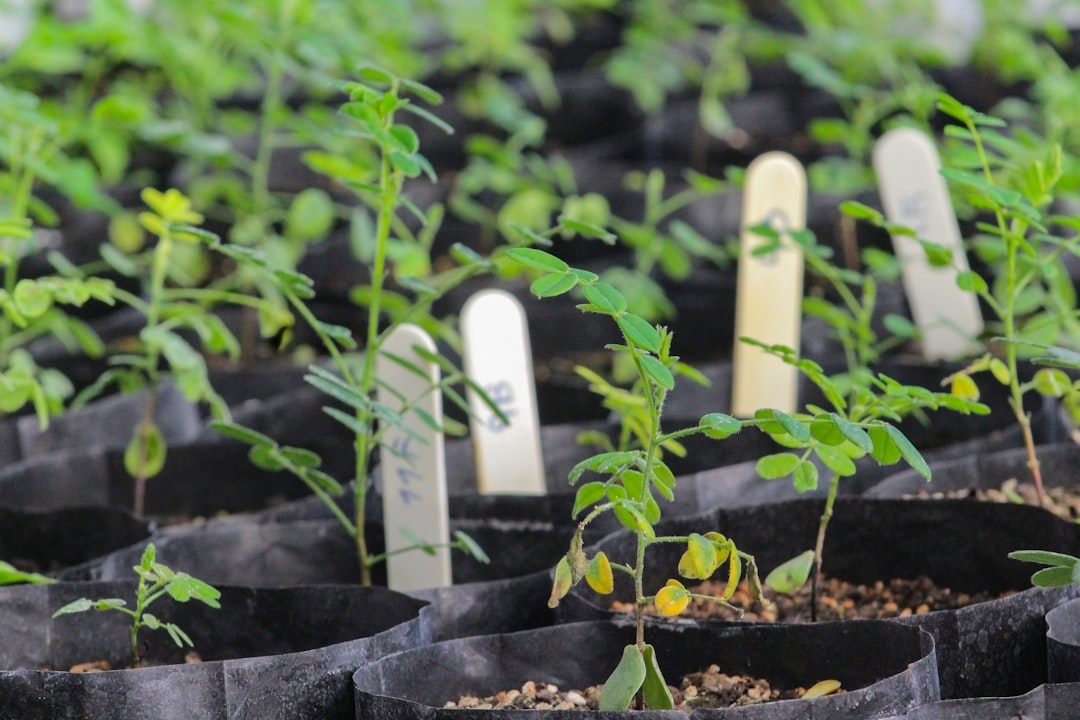
Decomposition rates vary dramatically by soil type. Sandy, well-draining soils break down biodegradable pots fastest — sometimes within 3–4 weeks. Dense clay soils can extend that to 14+ weeks, which means thicker-walled pots may not decompose fast enough to allow good root spread. In clay, always score the bottom and sides of your pot with a sharp knife before transplanting. This simple step makes a measurable difference in root establishment speed.
What’s Your Budget and Scale?
For a home gardener starting 50–100 seedlings per season, cost per pot matters less than quality. At that scale, CowPots or Fertilpots are worth the premium. For a small commercial cutting garden starting 2,000+ seedlings, cost efficiency becomes critical. Burpee peat pots or Fertil square pots in bulk orders offer the best price-to-performance ratio, typically dropping to $0.10–$0.15 per unit at volume.
Are You Focused on Environmental Impact?
Peat extraction has legitimate environmental concerns — peat bogs are slow-forming carbon sinks, and harvesting them releases stored carbon. If sustainability is a priority, coir pots (a true byproduct material) and CowPots (made from agricultural waste) are meaningfully better choices than standard peat. Newspaper pots are the clear winner on pure environmental footprint.
Choosing Based on Flower Type
- Tiny seeds (lobelia, petunia, snapdragon): Jiffy-7 pellets — the fine medium is ideal for germination
- Medium annuals (zinnia, cosmos, marigold): CowPots 3-inch or Burpee peat pots
- Large starts (dahlia, sunflower, celosia): Fertilpot 4–5-inch fiber pots
- Moisture-sensitive flowers (impatiens, begonia): Coir pots for best moisture regulation
- Quick-growing direct-sow types (amaranth, bachelor’s button): Newspaper pots work perfectly
Tips for Getting the Best Results from Biodegradable Flower Pots
Even the best pots underperform with poor technique. These practices will make a tangible difference in your seedling success rate.
Never let them dry out completely. Peat and fiber pots that fully dry out form a hardened shell that actively resists root penetration. Keep them consistently moist — not waterlogged, but never bone dry.
Plant at the right depth. The top rim of the pot should be slightly below the soil surface after transplanting. Any exposed rim acts as a wick, pulling moisture away from the rootzone and accelerating unwanted drying.
Pre-soak before transplanting. Giving your biodegradable pots a thorough watering 30–60 minutes before transplanting softens the walls and reduces transplant stress. Seedlings move from pot to ground with less disruption to the root environment.
Score thick-walled pots. For Fertilpots and coir pots, use a sharp knife to make 3–4 vertical slits down the sides before planting. This accelerates decomposition and root expansion, especially in compacted or clay-heavy soils.
Frequently Asked Questions About Biodegradable Seedling Pots
What are the best biodegradable flower pots for seedlings?
The best biodegradable flower pots depend on your seedling type and indoor growing period. Jiffy-7 peat pellets are ideal for tiny seeds and short starts. CowPots are best for medium annuals needing nutrient support. Fertilpot fiber pots suit larger seedlings and longer indoor periods. For the most eco-friendly option, choose coir pots or DIY newspaper pots.
Do biodegradable pots actually decompose in the ground?
Yes — most biodegradable pots decompose within 3–14 weeks after transplanting, depending on material and soil type. Peat and manure-fiber pots break down fastest. Coir pots take longer. In clay-heavy soils, scoring the sides of the pot with a knife significantly speeds up decomposition and root establishment.
Can I use peat pots for all types of flowers?
Peat pots work for most flowers, but the low pH of peat (3.5–4.5) can be a problem for pH-sensitive species. Adding a small amount of agricultural lime to your potting mix neutralizes this. For flowers like lavender or clematis that prefer neutral to slightly alkaline soil, coir or fiber pots are a better choice.
Are biodegradable pots more expensive than plastic?
At small quantities, biodegradable pots typically cost $0.15–$0.65 per unit, compared to $0.05–$0.10 for plastic six-pack cells. However, at scale — orders of 500+ units — bulk pricing on fiber and peat pots can bring the gap much closer. The labor savings from eliminating pot removal at transplant time also partially offsets the price difference.
What’s the difference between peat pots and coir pots?
Peat pots are made from sphagnum peat moss, which is slightly acidic and widely available. They break down faster than coir but raise sustainability concerns because peat extraction disturbs carbon-rich bog ecosystems. Coir pots are made from coconut husk fiber — a renewable agricultural byproduct — with a near-neutral pH and excellent moisture retention. Coir pots are the more environmentally responsible choice, though they decompose more slowly.
Ready to Start Growing Smarter
The shift to best biodegradable flower pots isn’t just a feel-good decision — it’s a performance upgrade for your seedlings and a genuine reduction in your operation’s plastic footprint. Healthier roots from day one, less transplant shock, and zero plastic waste at the end of the season. That’s a better system in every direction.
Start with the pot that fits your most common seedling type and growing window. Order a small batch of two or three different options this season and run your own side-by-side comparison — you’ll quickly discover which material your specific soil, climate, and flowers respond to best. The growers who produce the most consistent, stunning cuts are the ones who treat every starting decision as a variable worth testing.
Pick your pot. Score the bottom. Plant with confidence.


Add Comment