Contents:
- Quick Budget Overview: What to Expect at Each Price Point
- The 7 Best Solar Lights for Flower Beds in 2026
- GIGALUMI Solar Pathway Lights (8-Pack)
- Aootek 182 LED Solar Security Lights
- URPOWER Solar Spotlights (4-Pack)
- Maggift 8 Lumen Solar Pathway Lights (12-Pack)
- Solpex Solar Flickering Flame Lights (4-Pack)
- LITOM 12 LED Solar Landscape Spotlights
- Enchanted Spaces Solar Lantern String Lights (33-Foot)
- Side-by-Side Comparison: Solar Lights for Flower Beds
- Solar Lights vs. Low-Voltage Wired Lights: What’s the Difference?
- How to Choose the Right Solar Lights for Your Flower Beds
- Step 1: Know Your Sunlight Situation
- Step 2: Decide Between Accent and Task Lighting
- Step 3: Match the Light Color to Your Flowers
- Step 4: Check the IP Rating for Your Climate
- Expert Tip
- Step 5: Think About Maintenance Reality
- Frequently Asked Questions About Solar Lights for Flower Beds
- How many solar lights do I need for a flower bed?
- Will solar lights work in a shaded flower bed?
- What is the best solar light color temperature for flowers?
- How long do solar garden lights last?
- Can I leave solar flower bed lights out in winter?
- Ready to Light Up Your Flower Bed Tonight?
Picking outdoor lighting shouldn’t feel like solving a math problem. Yet here you are, staring at dozens of solar light options online, wondering which ones will actually stay lit past 9 PM and which ones will look sad and dim after two rainy days. You’re not alone — flower bed lighting is one of the most googled garden topics every spring, and the options are genuinely overwhelming for first-timers.
Good news: the best solar lights for flower beds don’t have to be expensive or complicated. This guide breaks down the top options across different budgets, explains exactly what to look for, and helps you walk away with a confident purchase — no gardening experience required.
Quick Budget Overview: What to Expect at Each Price Point
Before we get into specific products, here’s a realistic cost snapshot for the US market:
- Budget ($10–$25 for a pack of 4–8): Basic stake lights with warm white LEDs, 6–8 hour runtime, no special modes. Great for casual accent lighting.
- Mid-range ($30–$60 for a set of 4–6): Better panels, longer runtime (8–12 hours), sometimes color-changing or motion-sensor options.
- Premium ($60–$120+ per unit or set): High-lumen output, weather-resistant housing (IP67 rated), smart home compatibility, or decorative designs worth featuring as focal points.
Most beginner gardeners find the sweet spot in the $25–$50 range — enough quality to last 2–3 seasons without overspending on a first setup.
The 7 Best Solar Lights for Flower Beds in 2026
1. GIGALUMI Solar Pathway Lights (8-Pack)
Best for: Beginners on a budget | Price: ~$28 for 8
These warm white stake lights are the go-to recommendation for anyone planting their first flower bed. Each unit charges via a small integrated solar panel and delivers about 8 hours of soft illumination — enough to outline a bed from dusk to around 2 AM. The stainless steel and plastic construction feels surprisingly sturdy for the price, and the automatic on/off sensor means zero daily maintenance. At under $3.50 per light, you can border an entire 20-foot flower bed without breaking the bank. The warm 3000K color temperature flatters most flower colors, especially reds, yellows, and pinks. One honest downside: output is around 15 lumens per unit, which is accent lighting, not floodlighting. Perfect for edging, not spotlighting individual blooms.
2. Aootek 182 LED Solar Security Lights
Best for: Larger beds needing broader coverage | Price: ~$40–$50 each
Don’t let the “security light” label fool you — these wide-angle fixtures work beautifully when mounted on a low fence post or garden stake at the edge of a flower bed. Each head delivers up to 2,000 lumens on motion activation and drops to a soft ambient mode otherwise. Three adjustable heads mean you can aim light exactly where your best blooms are. Runtime in ambient mode reaches 12 hours on a full charge. They’re IP65 waterproof, so heavy Midwest thunderstorms won’t be a problem. At roughly $45 each, they’re a bigger investment than stake lights, but one unit can cover a 15-foot-wide bed easily. Best for gardeners who also want a bit of security lighting near entryways lined with flowers.
3. URPOWER Solar Spotlights (4-Pack)
Best for: Highlighting specific plants or features | Price: ~$36 for 4
Spotlights are a different animal from pathway stakes — they let you point focused beams at your showstopper plants. The URPOWER 4-pack delivers around 100 lumens per unit with an adjustable stake angle, so you can aim each light independently. The panel and light head are on a flexible 16-inch wire, letting you position the panel in full sun while the light points at a shadier spot in the bed. This separation design solves one of the biggest frustrations with solar garden lights: shaded planting spots. Runtime averages 8–10 hours. A set of 4 gives you enough coverage to spotlight a rose bush, a peony cluster, an ornamental grass, and a garden ornament simultaneously. Solid value for the price.
4. Maggift 8 Lumen Solar Pathway Lights (12-Pack)
Best for: Long borders and walkway-adjacent beds | Price: ~$35 for 12
When you need to line a long curved flower border — say, 30 to 40 feet of mixed perennials along a driveway — buying individual units gets expensive fast. Maggift’s 12-pack brings the per-unit cost down to under $3 while still delivering a consistent warm glow. These are pure accent lights at 8 lumens each, but spaced every 3 feet along a border, they create a polished, professionally landscaped look for very little money. The aluminum heads resist rust better than most plastic alternatives. Charging time is 6–8 hours of direct sun for a full 8-hour night cycle. These won’t wow anyone as individual units, but as a cohesive border system, they genuinely punch above their price.
5. Solpex Solar Flickering Flame Lights (4-Pack)
Best for: Decorative, cottage-style gardens | Price: ~$30 for 4
Not every flower bed needs clinical white LEDs. If your garden aesthetic leans toward wildflower meadows, cottage gardens, or English-style borders, these flickering flame lights add a warm, dynamic glow that static lights simply can’t replicate. Each unit mimics a torch flame using orange and yellow LEDs cycling at variable speed — the effect is surprisingly convincing from 10 feet away. They run about 6–8 hours per charge and handle rain without issue (IP44 rated, so suitable for typical outdoor use but not direct water jets). At $7.50 per light, they’re priced similarly to basic pathway stakes but deliver a much more distinctive look. A row of 8 flanking a cottage rose bed looks genuinely magical on a summer evening.
6. LITOM 12 LED Solar Landscape Spotlights
Best for: Value-conscious buyers wanting real brightness | Price: ~$45 for 2
LITOM has earned a loyal following among DIY landscapers for one reason: consistent brightness at a reasonable price. Each spotlight delivers 450 lumens — about 4x more output than the URPOWER units — with a wider 120-degree lighting angle. The separate panel design (18-inch cable) solves the shade problem mentioned earlier. Two adjustable light modes let you choose between constant-on dim and motion-activated bright, which is useful if your flower bed is near a patio you use at night. IP67 waterproof rating means these can handle full submersion, which matters if your yard floods after heavy rain. Two units can cover a 10 x 10-foot decorative island bed with comfortable, even illumination. A strong pick for gardeners who want real visibility, not just ambiance.
7. Enchanted Spaces Solar Lantern String Lights (33-Foot)
Best for: Raised beds, trellised flowers, and garden structures | Price: ~$20–$25
String lights aren’t just for patios. A 33-foot solar strand woven through a trellis of climbing roses or draped along the edge of a raised flower bed creates an entirely different — and stunning — lighting effect. These globe-style bulbs emit a warm 2700K glow, running up to 10 hours per charge via a single panel you stake in a sunny spot nearby. The strand includes 30 bulbs spaced roughly 12 inches apart. They’re weatherproof enough for three-season outdoor use (most US gardeners store string lights during hard winter months anyway). At around $22, this is arguably the most cost-effective way to create dramatic nighttime impact in a flower garden. Especially effective in USDA Zones 5–9 where the growing season gives you 5–6 months of warm evening use.
Side-by-Side Comparison: Solar Lights for Flower Beds
| Product | Price | Lumens | Runtime | IP Rating | Best Use |
|---|---|---|---|---|---|
| GIGALUMI 8-Pack | ~$28 | 15/unit | 8 hrs | IP44 | Budget edging |
| Aootek 182 LED | ~$45 | 2,000 | 12 hrs | IP65 | Wide-area coverage |
| URPOWER 4-Pack | ~$36 | 100/unit | 8–10 hrs | IP44 | Plant spotlighting |
| Maggift 12-Pack | ~$35 | 8/unit | 8 hrs | IP55 | Long borders |
| Solpex Flame 4-Pack | ~$30 | Decorative | 6–8 hrs | IP44 | Cottage/decorative |
| LITOM Spotlights (2) | ~$45 | 450/unit | 10–12 hrs | IP67 | Bright focal lighting |
| Enchanted Spaces String | ~$22 | Warm ambient | 10 hrs | IP44 | Trellises & raised beds |
Solar Lights vs. Low-Voltage Wired Lights: What’s the Difference?
A lot of first-time buyers confuse solar garden lights with low-voltage wired landscape lighting systems. They look similar in product photos but work very differently. Here’s the short version:
- Solar lights run entirely off sunlight stored in a built-in rechargeable battery. No wiring, no electrician, no ongoing electricity cost. Setup takes about 5 minutes per unit. The tradeoff: output is limited by panel size and battery capacity, and performance dips in cloudy climates.
- Low-voltage wired systems (like Malibu or VOLT lighting) run off a transformer plugged into an outdoor outlet. They offer more consistent brightness year-round regardless of sun exposure, but require running cables through your yard and cost $150–$400+ for a starter system, plus installation time.
For most beginner gardeners in sunny US climates (Zone 6 and warmer), solar lights are the smarter starting point. They’re reversible — if you decide later you want wired lighting, you haven’t committed to anything. Wired systems make more sense if your flower beds are in heavy shade or if you live somewhere with frequent overcast winters, like the Pacific Northwest.
How to Choose the Right Solar Lights for Your Flower Beds
Step 1: Know Your Sunlight Situation
Solar lights need 6–8 hours of direct sun on their panels to perform as advertised. If your flower bed itself is shaded by a tree or structure, look for models with a separate panel on a cable (like the URPOWER or LITOM options above) — you can stake the panel in a sunny patch of lawn while the light sits in the shade. Don’t buy integrated-panel lights for shaded beds. They’ll barely glow.
Step 2: Decide Between Accent and Task Lighting
Ask yourself: do you want to see the flowers or just know the bed is there? Accent lighting (8–50 lumens) creates a soft glow that defines a space without actually illuminating plants clearly. Task lighting (200+ lumens) lets you actually identify your flowers at night. Most flower bed setups benefit from a combination: low pathway stakes for edging, plus one or two spotlights aimed at feature plants.
Step 3: Match the Light Color to Your Flowers
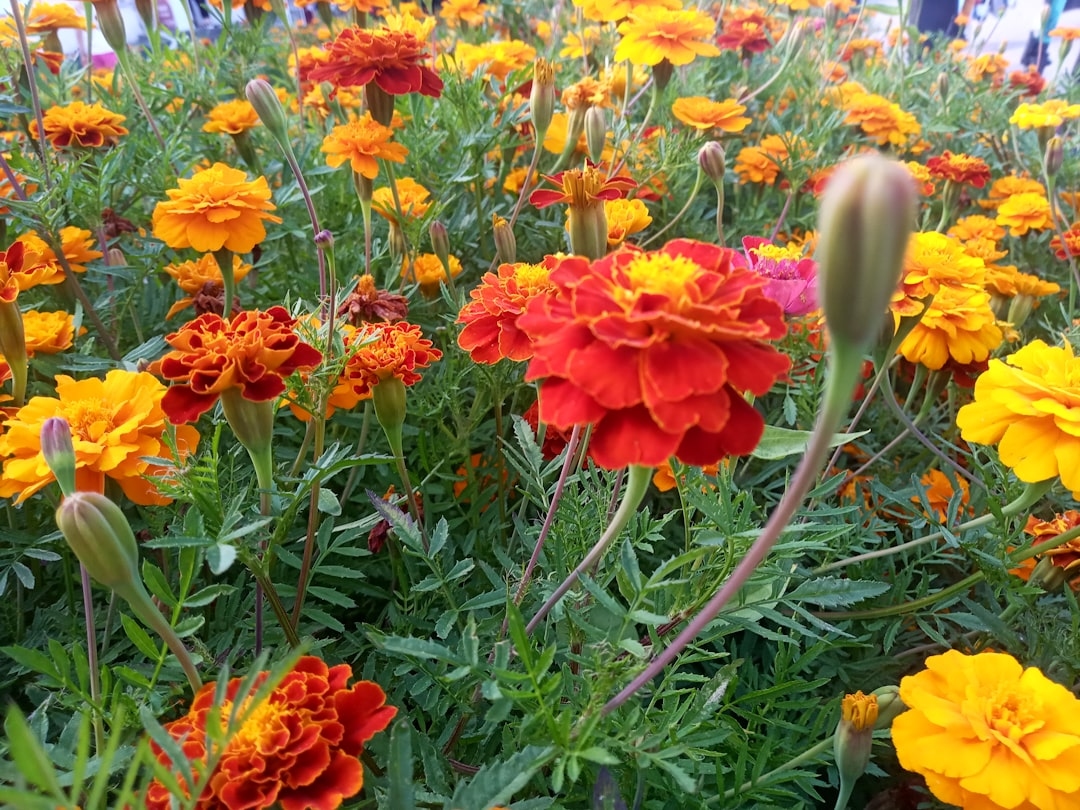
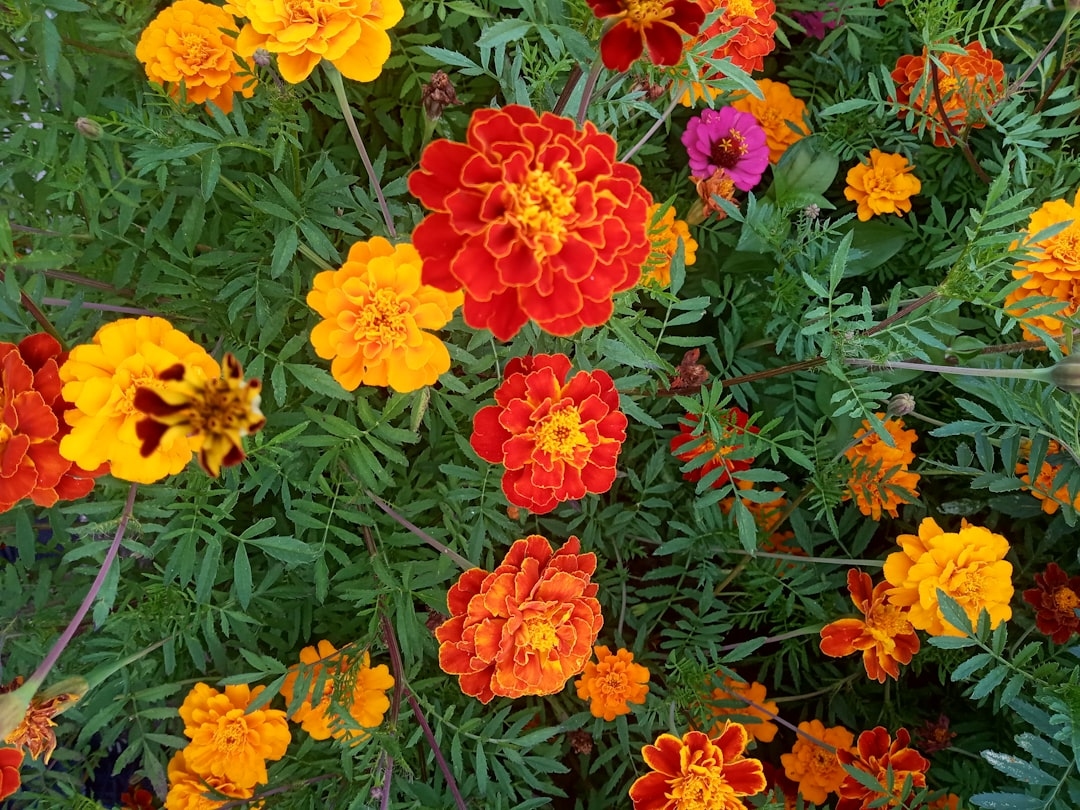
Color temperature matters more than people realize. Warm white (2700K–3000K) is flattering for warm-toned flowers — roses, marigolds, zinnias, sunflowers. Cool white (5000K–6000K) can wash out those same colors but makes blue, purple, and white flowers (lavender, salvia, white hydrangeas) look crisp and ethereal. When in doubt, warm white is the safer default for mixed beds.
Step 4: Check the IP Rating for Your Climate
IP44 handles rain. IP65 handles rain and dust. IP67 can survive temporary submersion. If you’re in a climate with heavy spring rain or occasional flooding, don’t buy anything below IP65 for lights that sit low to the ground.
Expert Tip
“I always tell my clients to think of solar garden lights the way they think of mulch — it’s the finishing layer that makes everything else look intentional. For flower beds specifically, warm-toned stake lights spaced every 2–3 feet along the border will make a $200 planting look like a $2,000 landscape design. The light does the heavy lifting.”
— Margaret Hollis, Certified Professional Horticulturist (CPH) and owner of Hollis Garden Studio, Raleigh, NC
Step 5: Think About Maintenance Reality
Solar lights have rechargeable batteries — usually NiMH or lithium — that degrade over time. Budget lights typically use NiMH AA batteries that last 1–2 years before needing replacement (usually $5–$8 for a pack of 4). Premium units often use lithium cells rated for 3–5 years. Factor this into your cost-of-ownership math. A $28 pack of budget lights might cost you $10–$15 in battery replacements over 3 years, putting the true cost closer to $40–$43. Still cheaper than wired alternatives, but worth knowing.
Frequently Asked Questions About Solar Lights for Flower Beds
How many solar lights do I need for a flower bed?
A general rule: place pathway stake lights every 2–3 feet along the border of the bed. For a standard 12-foot flower border, that’s 4–6 lights. For spotlighting individual plants, one spotlight per 3–4 square feet of focal area is a good starting point. Most beginner setups work well with 6–8 stake lights plus 2 spotlights for a typical front-yard bed.
Will solar lights work in a shaded flower bed?
Standard solar lights won’t perform well with less than 4–5 hours of direct sun on the panel. For shaded beds, choose lights with a separate solar panel on a cable so the panel can be positioned in a sunnier location while the light stake sits in the shade. Models like the URPOWER Solar Spotlight and LITOM Landscape Light both offer this design.
What is the best solar light color temperature for flowers?
Warm white (2700K–3000K) is the most flattering for the widest range of flower colors, especially reds, oranges, pinks, and yellows. Cool white (5000K+) works better for white or purple flowers. Avoid pure blue or green-tinted lights — they make most garden plants look unnatural and can appear harsh in a residential setting.
How long do solar garden lights last?
The LED bulbs in most solar lights are rated for 50,000+ hours — essentially indefinite for practical purposes. The battery is the limiting factor. Budget NiMH batteries last 1–2 years; mid-range lithium batteries last 3–5 years. The solar panel itself typically lasts 5–10 years before efficiency degrades noticeably. Replacing batteries annually or biannually is the easiest way to extend the life of any solar light.
Can I leave solar flower bed lights out in winter?
In USDA Zones 7–10 (mild winters), leaving lights out year-round is generally fine for IP65-rated or higher units. In Zones 3–6 where temperatures regularly drop below 0°F, bring lights indoors or store them in a garage during the coldest months. Freezing temperatures degrade NiMH batteries significantly faster, and the seals on lower-rated units can crack. A quick 15-minute fall cleanup to store your lights can easily double their lifespan.
Ready to Light Up Your Flower Bed Tonight?
Start simple. Buy one pack of stake lights and one set of spotlights, install them over a weekend afternoon, and see how your bed looks after a week. You’ll quickly develop an eye for where you want more light, where you want less, and whether you’d prefer warmer or cooler tones. Solar lighting is one of the most forgiving garden investments you can make — stakes pull out of the ground in seconds, and nothing is permanent until you decide it is.
The best solar lights for flower beds are the ones you’ll actually use. Pick a budget tier, match the style to your garden’s personality, and don’t overthink it. Your flowers will thank you — and so will everyone who walks past your yard after dark.



Add Comment